
Why Sustainable Partnerships are the Future of New Zealand Business—The Green Standard.
The Rise of Sustainable Brand Presence in Aotearoa.
Selecting your business partners today is a significant statement of your brand's core principles, especially as environmental responsibility becomes a fundamental requirement. In New Zealand, a country defined by its natural beauty and Kaitiakitanga, businesses are moving toward more sustainable materials and circular economy models. This shift is redefining the event and retail industries, moving away from single-use plastics toward high-quality, recyclable alternatives. Whether you are a marketing manager planning a national roadshow or a retail owner refreshing your storefront, choosing a company that prioritises the planet is essential. This article explores the importance of sustainable sourcing, the impact of Zero-waste initiatives, and how leaders like Brandstand are helping build a better New Zealand through eco-innovative display solutions.

1. What Defines a Sustainable Business Partner in 2026?
A sustainable partner is defined by transparency, from their supply chain to the end-of-life disposal of their products. In today’s market, it’s about more than just a recyclable label; it’s about emission awareness and material integrity. A company that prioritises a better New Zealand will offer solutions such as zero-waste print media and recycled composites. Key features of a green partnership include the use of non-toxic, water-based inks, energy-efficient manufacturing processes, and a commitment to reducing the carbon footprint of inter-island freight through lightweight, smart design.
2. The Evolution of Eco-Displays
The journey of sustainable marketing from niche green products to mainstream corporate necessity is a testament to consumer demand. Initially, eco-friendly often meant lower quality or limited aesthetic choices. Today, we have entered the era of Circular Displays, where high-performance materials like recycled polyester and aluminium frames are designed for a forever lifecycle. These modern solutions allow for a premium look—such as high-gloss recycled acrylics or textured acoustic panels—without the environmental guilt. This evolution has made it possible for brands to be both visually stunning and ecologically responsible.
3. How Sustainable Sourcing is Redefining the New Zealand Event Sector
Eco-conscious materials are significantly impacting the traditional "take-make-waste" model of trade shows and conferences. These sustainable units offer a level of long-term value that single-use displays cannot match. By utilising modular systems that can be re-skinned with new graphics rather than replaced entirely, businesses are drastically reducing landfill waste. This is particularly vital in New Zealand, where the event industry is striving to meet new regulated stewardship rules. Investing in high-quality, reusable hardware is an invaluable asset for companies looking to protect both their budget and the local environment.
4. The Role of "Zero-Waste" Print Media in Brand Storytelling
Print media has traditionally been a major contributor to PVC and plastic waste in landfills. However, the rise of innovative alternatives like Zero Print Media is changing the narrative. These materials can replace traditional vinyl and stretch fabrics with high-quality substrates that are fully recyclable, often repurposed into products such as fence posts for New Zealand’s agricultural industry. Choosing these alternatives ensures that your brand’s message doesn't leave a permanent scar on the landscape, aligning your marketing efforts with a cleaner, greener future for Aotearoa.
5. Customisation Options—Reflecting Your Values Through Design
The ability to customise sustainable displays is one of their most attractive features. Clients no longer have to choose between "green" and "branded." Customisation options range from recycled brochure holders to acoustic room dividers wrapped in 100% recycled materials. This flexibility allows brands to create a cohesive, professional environment that explicitly tells their sustainability story—every aspect of your display can be personalised to reflect a commitment to a better New Zealand.
6. Rental vs. Ownership: The Sustainability Perspective
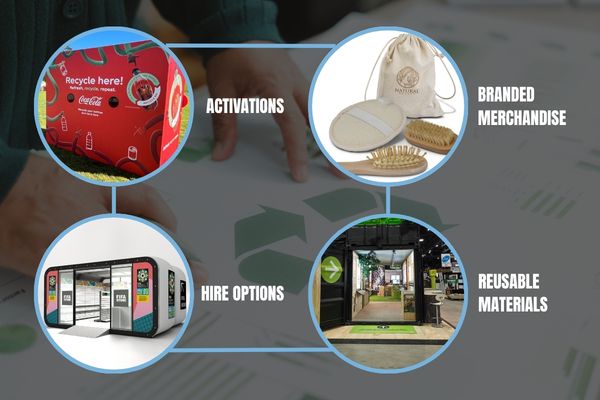
The decision to hire or buy also carries environmental weight. Hiring equipment is a cornerstone of the circular economy; it maximises the utility of a single product across many users, reducing the need for new manufacturing. On the other hand, purchasing high-quality, durable gear intended for years of use—rather than cheap, disposable alternatives—is a form of slow marketing that values longevity over convenience. Both paths, when managed by a sustainability-focused provider, contribute to reducing industrial waste and resource depletion.
7. The Essentials of an Eco-Friendly Display: Key Features to Look For
When choosing sustainable gear, look for longevity, recyclability, and non-toxicity. A great eco-product should be built to withstand the rigours of frequent use, avoiding the need for early replacement. Look for certifications regarding recycled content. Ease of maintenance is also crucial; surfaces that are easy to clean without harsh chemicals ensure the product remains in top condition while protecting the health of the people who use it.
8. Sustainable Displays and the NZ Landscape: A Local Commitment
In New Zealand, being sustainable means supporting the local economy and environment. Choosing a partner that manufactures locally reduces the emissions associated with international shipping and supports Kiwi jobs. Whether it’s providing Acoustic solutions for Auckland offices or robust outdoor displays for agricultural Fieldays, these products are designed to meet the unique challenges of the New Zealand climate. This local focus ensures that your marketing spend stays within the community and contributes to a resilient, self-sufficient nation.
9. Why Choose Brandstand for Your Sustainable Goals?
At Brandstand, we believe that your brand’s physical presence should reflect your commitment to a better New Zealand—were at the forefront of the shift toward a circular economy in the NZ display industry. Our Brandstand ZERO range is a dedicated commitment to providing alternatives to harmful PVC and plastics. We don’t just sell products; we offer an end-of-life solution, ensuring that when your graphics have served their purpose, they are processed through dedicated recycling programs rather than sent to landfill. With a focus on durability, recycled materials, and eco-friendly print options, Brandstand is the leading choice for brands that want their physical presence to be a force for good.
Our curated range of sustainable branded merchandise is designed to move beyond giveaways and become a lasting part of your audience’s lifestyle. From eco-friendly seed packs and FSC-certified notebooks to recycled polyester apparel and bamboo tech gadgets, every item in our collection is selected with a focus on longevity, utility, and environmental stewardship. By prioritising high-quality, responsibly sourced materials, we help you reduce waste while increasing brand recall—ensuring your logo isn't just seen, but respected.
10. The Future of Green Business: Trends and Predictions
The future of sustainability in New Zealand is moving toward regulated product stewardship and smart materials. Trends indicate a surge in bio-based alternatives, such as mushroom-based packaging and plant-fibre displays. We expect to see more "Smart Packaging" where QR codes tell the entire story of a product's origin and recycling instructions. These advancements are making sustainable business more transparent, efficient, and interactive, ensuring that "doing better" is the baseline for success in the New Zealand business community.
Brandstand’s mission to build a better New Zealand is reflected in our dedicated partnerships with our clients. Our collaboration with Coca-Cola serves as a primary example of how we translate sustainable principles into tangible brand activations. For their presence at the iconic Christmas in the Park event, we engineered a bespoke recycling station that moved beyond standard waste disposal to become a functional piece of brand storytelling.
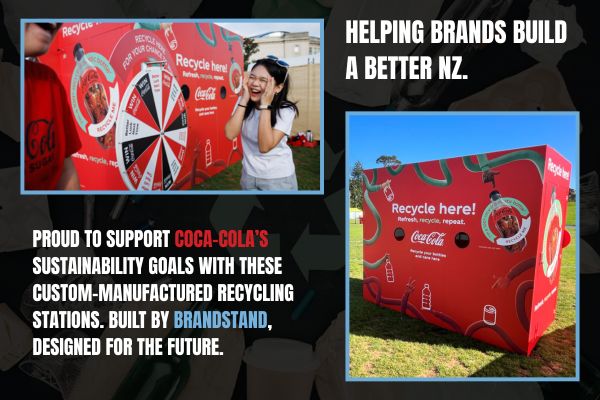
This activation highlights the shift toward Circular Displays within the New Zealand event sector. By utilising high-performance, recyclable materials, we helped ensure that even high-traffic public events can significantly reduce their environmental footprint. Through these eco-innovative solutions, we continue to support our partners in achieving their sustainability goals while protecting the natural beauty of Aotearoa.
Key Takeaways
- Environmental Impact: Choosing sustainable materials drastically reduces the amount of plastic and PVC entering New Zealand landfills.
- Brand Reputation: Consumers are actively seeking out brands that demonstrate a genuine commitment to the planet.
- Circular Economy: Shifting from a "linear" to a "circular" model ensures materials are reused and recycled in a continuous loop.
- Brandstand Leadership: Through the ZERO range, Brandstand provides a clear pathway for businesses to transition to eco-friendly displays.
- Future Resilience: Sustainable practices protect business value and ensure compliance with tightening environmental regulations in NZ.
Ready to build a greener future for your brand?
If you want to learn more about our sustainable print options and the ZERO range, give us a call at 0800 10 99 88. We’d love to help you make a big impact with a small footprint.